Tagged: technology Toggle Comment Threads | Keyboard Shortcuts

  • user 3:35 pm on July 10, 2016 Permalink | Reply
    Tags: , , , , , , , technology,   

    Banken: Mit Instant Payments zurück zu alter Grösse? 

    In den macht sich die Sorge breit, von den Anbietern mobiler und Online-Bezahllösungen, wie Alipay, Apple Pay, Samsung Pay, WeChat, Amazon und PayPal/Venmo, umgangen zu werden. In der Tat unternehmen die Interkonzerne einige Anstrengungen, um ihre Abhängigkeit von der Zahlungsverkehrinfrastruktur der Banken zu verringern. In China haben sich Alipay und WeChat bereits deutlich von den Banken bzw. von UnionPay emanzipiert und in den USA betreiben Venmo und andere die Separation mit dem Automated Clearing House.

    Die Banken wollen dem schleichenden Bedeutungsverlust in einer ihrer Paradedisziplinen mit sog. Real-Time Plattformen für entgegenwirken. Schlüsselelement ist ISO 20022. Der Bankenverband liefert folgende Definition:

    ISO 20022 wird ebenfalls als UNIFI-Standard (UNIversal Financial Industry message scheme) bezeichnet. Dieser Standard strebt eine weltweite Konvergenz von existierenden und neuen Nachrichtenstandards aus verschiedenen Bereichen des Finanzwesens an. Für die Entwicklung neuer Nachrichten bietet ISO 20022 eine Plattform, die einen einheitlichen Entwicklungs- und Modellierungsprozess von Nachrichten vorgibt. Dies bedeutet, dass Nachrichten in Standardisierungsorganisationen beispielsweise bei SWIFT (Society for Worldwide Interbank Financial Telecommunication) entwickelt und unter ISO 20022 als weltweit gültiger Standard verabschiedet werden.

    So weit so gut. Allerdings geben auch Bankenvertreter zu bedenken, dass Real Time Plattformen auf Basis von ISO 20022 nur so gut sein können, wie die Verarbeitungskapazitäten der Banken damit Schritt halten. Denn: Was nützt eine sechsspurige Autobahn ohne Geschwindigkeitsbegrenzung, wenn auf ihr nur Kleinwagen mit 50 PS und/oder Schwerlaster unterwegs sind? Was, wenn auf einmal Sportwagen und wendige, verbrauchsarme Mittelklassewagen mit großem Stauraum den Zugang bekommen? Das IBS Journal bringt es in seiner aktuellen Ausgabe auf den Punkt:

    Building a new platform is all well and good but unless bank&;s own is flexible and run inexpensively, while stiff offering a great front-end-consumer experience, then they could still lose out to newcomers and challenger , especially if they have access to the new national real-time infrastructures being built (in: Real-time: platforms for innovation?)

    Um also in den Genuss der Vorteile kommen zu können und dem Schicksal der &;Disintermediation&; zu entgehen, müssen die Banken die technologischen Voraussetzungen zuvor geschaffen haben:

    The service layer should be the battleground for business and volume in the opinion of most regulators and customers, but this can only happen if the infrastructure layer is good enough to compete with the likes of Amazon or Alibaba (ebd.).

    Daneben sind noch weitere Fragen zu beantworten: Was ist zu tun, wenn einige Länder am alten ISO 8583 festhalten, um die Verarbeitung in Echtzeit zu erreichen? Wie kann ein Flickenteppich an Instant-Payments-Lösungen verhindert, zumindest jedoch eingedämmt werden?

    Written by Ralf Keuper

    Featured Image: Hands of Person Shopping in Internet Making Instant Mobile Telephone Payment Transaction via Shutterstock

    The post Banken: Mit Instant Payments zurück zu alter Grösse? appeared first on Fintech Schweiz Digital Finance News – FintechNewsCH.
    Fintech Schweiz Digital Finance News – FintechNewsCH

     
  • user 11:36 am on July 9, 2016 Permalink | Reply
    Tags: , , technology   

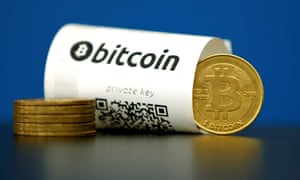
    Blockchain: the answer to life, the universe and everything? | World news | The Guardian 

    If you aren’t tied to the tech community, you might not have picked up on this salvation rhetoric. But you probably have heard of , which burst into the public consciousness before imploding dramatically in 2014.

    But now, bitcoin is starting to look less important than the engine that drives it – the . It was created to solve a problem that had been puzzling digital activists for decades: how to create digital property without a central authority keeping track of who owns what.

    The answer to that question, first proposed by bitcoin’s pseudonymous creator, Satoshi Nakamoto, was to create a decentralised digital ledger, keeping track of every transaction made, and with its accuracy guaranteed through the combined honesty of the entire network.

    The core of the idea is to get computers burning energy in order to prove that they are trustworthy, and stamping that trust on the “blocks” of recorded transactions. You could still lie to the network – but you’d need to burn more energy doing so than every honest participant, combined.

    Bitcoin was the first to use the blockchain, but the currency is now starting to look a bit like the steam pumping engines invented in the 17th century. Yes, it’s ingenious, but the real revolution comes when the underlying technology is used for something altogether new.


  • user 7:36 am on July 9, 2016 Permalink | Reply
    Tags: , , , technology   

    Wallet or Smartphone: The FinTech in Front of the FinTech 

    AAEAAQAAAAAAAAflAAAAJDliYTIxMjFlLTAwNmMtNDg4ZC04MDY2LWJjMGMyZjIwMjcyMA

    I’m on line at Starbucks and reach to pay for my Triple Venti Nonfat Latte, only I don’t reach for my wallet, I reach for my . My poor wallet is suffering from some serious neglect these days. It occurred to me that if I didn’t have a weakness for food trucks, I probably wouldn’t use cash at all. The apps on my smartphone are now my proxy for a bank, holding and moving money in one click – the new way to truly “bank on the go.”

    Think of the applications you use on a daily basis. How many of these apps have the power to transfer money? Undoubtedly, more than you realize. The 1.5 million users utilizing the payment app, Venmo, transferred $1.3 billion in funds last quarter alone. As a strong supporter of the Revolution, I understand its magnetism, but it doesn’t take an aficionada to see the technological insurgence has already started.

    Consumers are embracing self-management of their financial resources in ever-greater numbers. This increasing trend means have greater competition for consumer mindshare and, as a result, reduced relevance and potentially reduced income. Individuals value transparency and choice; having their data available in user-friendly tools that can be accessed anywhere is powerful. The problem for the banks is that they aren’t able to provide these same types of tools with the same currency or quality due to lack of resources and slow moving compliance departments. Now, while banks begin to work on their next generation platforms in this hyper-connected age, FinTech apps are gaining ground quickly. For instance, the online payment system, PayPal, has singlehandedly become the new face of banking, holding more consumer money than most major Financial Institutions. The banking industry hasn’t experienced such a profound transformation since 1969, when the ATM first opened.

    As continues to pull us away from big banks society willingly complies, but how can we be sure our money and personal data are secure? Millennials, who represent more than a quarter of the general population, use these payment apps as an alternative to a savings accounts, storing their money for future use, without the fees and restrictions associated with major banks.  However, these apps, often run by a third party software and not on a bank’s federally insured regulated infrastructure, can be risky. When transferring and holding money in a FinTech app, the user takes the risk.  As competition increases and technology advances these apps come and go over night, but what happens if your money is stored in an app that one day disappears? Or if the app temporarily has custody of your funds and you can’t access them? Or if a sender cancels a transaction? Most users do not realize their money is not insured and funds cannot be easily recouped. Also, as financial data becomes more accessible, so does the possibility of security threats. To most, the risk, sometimes unknown, is worth it for faster, more convenient service.

    There is good news – the potential for banks and FinTech apps to work together is endless. Banks can endorse these apps and give them a safe and insured platform to run on. The data behind these apps is also extremely powerful. Using financial data aggregation platforms, like EEI’s Trusted Network™, banks and FinTech apps can partner to perform advanced analytics. Enriched data can be used to determine spending capabilities and therefore help users make educated financial decisions. FinTech Apps aren’t going away, banks will need to be flexible and innovative in their response to consumers, all while learning to share customers’ revenue and profits.  

    As with everything else, we are seeing this paradigm shift with the early adopters, but before long it will be common practice with the laggards as well. All consumers want choice – what car to buy, what brand to wear and even what personal financial management apps to use. What drives choice? Awareness, branding, but most importantly ease of use and convenience. Despite operational and financial risks, the use of FinTech apps has increased. Let’s just hope our cellphone batteries and FinTech companies don’t die before we have a chance to pay the bill! 🙂

    This is part of my FunTech blog series exploring the shift in technology and culture in the financial services industry.


    [linkedinbadge URL=”https://www.linkedin.com/in/jaimieanzelone” connections=”off” mode=”icon” liname=”Jaimie Anzelone”] is Business Manager, Office of the CEO of Enterprise Engineering Inc.

     
  • user 7:35 pm on July 8, 2016 Permalink | Reply
    Tags: 3d7ce27d6475, , , blockhain, , , technology, what is   

    What is bitcoin and the blockchain? 

    AAEAAQAAAAAAAAgcAAAAJGFiNjZlNjZlLWYzOGItNGRiYS1iMDk2LWRmNTkxNDFhMmMzOA

    A of articles, blog posts, videos, books and courses to help get you started.

    As , ethereum and other cryptocurrencies have become more popular, we’ve gotten more and more requests from people seeking suggestions for how to learn about the .

    In pulling together this list of starter articles, blog posts, books and courses, we’ve found that most people are initially willing to invest about 30–45 minutes to learn about cryptocurrencies. That can then ignite enough curiosity to invest another 2–3 hours — and then they’re off to the races.

    Feel free to share this list with others. Over the last year, members of the Digital Currency Initiative have sent it to several hundred people — from finance ministers to longtime developers interested in the space and, as a result, have seem them change their policy position or even change jobs.

    This list of articles is by no means exhaustive; it’s a living document. Feel free to suggest your favorite ethereum, smart contracts, regulatory and DAO explainer articles ([email protected]) or create your own list and share it with the community!

    Overviews (30–45 mins)

    Applications (60–90 mins)

    Technical Overviews (2–4 hours)

    Books (1–2 days each)

    Bitcoin Course & Textbook (4–5 weeks)

    Special thanks to Michael Casey, Chelsea Barabas and Neha Narula for suggesting articles for this list!


    Brian Forde is Director of the Digital Currency Initiative at MIT Media Lab

     
  • user 3:35 pm on July 8, 2016 Permalink | Reply
    Tags: , , , , Finalists, , , , , technology,   

    Swisscom Announces 10 (Fintech) Finalists of StartUp Challenge 2016; 4 of them are Fintechs 

    has announced the ten startups selected to pitch on August 16, as part of its 2016.

    Each year, the Swisscom StartUp Challenge, a business accelerator program organized in cooperation with venturelab, rewards five startups that are trying to get their ideas off the ground. These startups get a trip to Silicon Valley for a tailor-made acceleration program, mentoring with Swisscom Venture, investors and business angels, and get evaluated for an investment by Swisscom Ventures.

    The ten startups, selected among over 200 applications from ventures tackling IT and telecommunication, , e-commerce, adtech, big data, Internet of Things, among many other areas, will have to prove themselves in August during a pitch day at the campus of the Ecole Polytechnique Federale de Lausanne.

    The five best startups will be selected out of the ten teams and will fly to Silicon Valley in September/October 2016 to continue their journey in the program.

    swisscom startup challenge 2016 stages

    Previous winners of the Swisscom StartUp Challenge include Monetas, CashSentinel, among many others.

    This year&;s ten selected startups are:

    Advanon (Fintech)

    Launched by three former Google employees, Advanon allows SMEs to prefinance their outstanding invoices easily, quickly and transparently.

    Based in Zurich, Advanon is the leading invoice financing platform in Switzerland.

    Lykke (Fintech)

    Lykke is building a global marketplace for all asset classes and instruments. Powered by , the online marketplace offers immediate settlement of transactions and much lower transaction costs.

    Qumram (Fintech)

    Qumram provides a solution that allows for every digital interaction (web, social and mobile) to be recorded, providing a digital audit trail for financial services organizations.

    Qumram has created a single source of truth, recording indisputable proof of every keystroke, button click or mouse movement.

    Xorlab

    Xorlab is a cybersecurity company that develops and provides dynamic IT security products and services for businesses.

    Xorlab has developed software for the early detection and prevention of client-side attacks, including spear phishing and drive-by infections.

    Qipp (Fintech?)

    Qipp is a web application that enables property managers and owners to bundle digital services and enhance the relationships between owners, managers and tenants.

    The app allows for interaction between all involved parties, allowing for efficiency, value-added services, smart services and community-oriented micro-apps.

    Xsensio

    Xsensio has developed a wearable that uses biochemical information on the surface of our skin to provide real-time information about our state of health and well-being.

    Xsensio is based on nanotechnology that exploits information from proteins, molecules and electrolytes on the skin surface.

    Biowatch (Fintech)

    Biowatch has developed a vein reading biometric wristwatch that recognizes its wearer from the pattern of their veins and therefore provides clear, secure authentication.

    Through bluetooth and NFC, the watch enables users to make online payments, unlock their car, automatically log into their accounts or access buildings.

    CatchEye

    CatchEye has developed a video conferencing add-on that enhances video chat picture quality on Skype, Hangouts, Vidyo, Zoom and others, and enables participants to make eye contact. CatchEye works with Intel RealSense 3D camera.

    Fashwell

    Fashwell is a fashion-tech startup that has developed an app that allows users to find and buy fashion products online thanks to an image analysis algorithm based on machine learning. The app identifies fashion items and provides a dynamic linking of these items to online shops.

    Fashwell has already raised over US$ 1 million in equity funding.

    Nanolive

    Nanolive is a new type of technology that enables scientists to conduct 3D microscope-based exploration of living cells without damaging .

    The 3D Cell Explorer is a high-speed, high resolution and non-invasive tool that can look deep inside biological systems.


    Featured image via Swisscom.ch.

    The post Swisscom Announces 10 (Fintech) Finalists of StartUp Challenge 2016; 4 of them are Fintechs appeared first on Fintech Schweiz Digital Finance News – FintechNewsCH.

    Fintech Schweiz Digital Finance News – FintechNewsCH

     
  • user 12:19 am on July 8, 2016 Permalink | Reply
    Tags: , , , Passed, , technology   

    We Have Passed Peak Blockchain Investment 

    As the summer heats up, hype may (finally) be cooling down. 2016 will likely see less in and blockchain , but that is true for many other areas, as well. This year to date has seen $ 161 million invested so far, while 2015 saw a total ofRead More
    Bank Innovation

     
  • user 11:32 pm on July 7, 2016 Permalink | Reply
    Tags: , , , technology   

    In race to be Asia’s fintech hub, Singapore leads Hong Kong| Reuters 

    SINGAPORE Singapore is rushing to reinvent itself as ‘s financial , or , to fend off a regulatory threat to its wealth management industry and revive a sluggish economy.

    State funding, light-touch regulation and a recent move to allow start-ups to test financial products in a controlled environment have put Singapore ahead of rival Hong Kong to be Asia’s fintech hotspot.

    Much like Uber, Airbnb and others have harnessed technology and online social networking to disrupt taxi and hotel services, fintech firms are shaking up the traditional banking and financial services industry.

    Singapore’s fintech drive comes as its role as an offshore private banking center is under threat from a multi-billion-dollar money laundering scandal in neighboring Malaysia, and as Indonesia chases undeclared money parked in the low-tax city state.

    Also, Singapore’s traditional shipping and manufacturing growth drivers are faltering amid a global economic slowdown and a slump in commodity prices and demand.


  • user 6:10 pm on July 7, 2016 Permalink | Reply
    Tags: , Conducts, , , , Myanmar, technology,   

    Myanmar Microfinance Firm Conducts Blockchain Test 

    Tech Infoteria has successfully tested an application of with firm BC Finance.
    fintech techcrunch

     
  • user 3:35 pm on July 7, 2016 Permalink | Reply
    Tags: , , , , , , , , , , , , technology,   

    Credit Suisse Report Names Technologies Trends Changing Banking 

    has released a on the Swiss financial center in which it points out the key and that are .

    Credit Suisse Swiss Financial Center 2016 reportThe report, entitled &;Swiss Financial Center 2016,&; addresses the ongoing changes occurring in the financial service industry worldwide.

    The Internet is changing the behavior of bank clients. Meanwhile innovative startups are coming up with new business models and cutting-edge technologies to change the way we manage our money.

    During the past two years, interest in has increased massively, becoming a dominant buzzword in the financial industry.

    &;Digitalization in the financial sector will change banking,&; the report says. Notably, digital transfers and payments transactions provide an attractive alternative to cash payments as they can be generated via smartphone apps.

    In retail banking, online processing of banking activities is providing greater convenience and flexibility to clients.

    Personal financial management (PFM) applications give clients an overview of their personal assets, current income and spending. They generate analysis and recommendations for personal budgeting.

    Trading and advisory platforms enable users to access stock exchange trading. These platforms also analyze client portfolios using algorithms and generate automated investment recommendations. -advisors are also used in private banking, complementing the work of client advisors.

    Robo-advisors are increasing in popularity in the private banking segment, and their advantages are clear: they are low-cost, can be used in a multitude of areas, have access to huge databases and are on call 24 hours a day.

    In credit operations and capital markets, new products are enabling users to avoid financial intermediaries. On these platforms investors and borrowers come into direct contact with one another. These platforms are for instance crowdfunding and peer-to-peer lendings platforms.

    Virtual currencies are an alternative means of payment to national currencies. for instance enables users to make payments directly to one another, without using the services of a bank or other middleman.

    Digital support, also known as regtech, promotes the implementation of regulations and helps ensure that risk analysis of unstructured data, scenario analysis and monitoring activities are organized more efficiently.

    &8220;The new technologies in the financial arena will lead to a rationalization of processes in the banking sector in the years ahead and due to the strengthening of the client&8217;s position are set to alter the client/bank relationship on a lasting basis,&8221; the report says.

    Another that plays a significant role within fintech is technology, which the report claims has &8220;the potential to fundamentally change the financial industry.&8221;

    It details:

    &8220;Blockchain gained recognition above all thanks to the Bitcoin. However, its area of use is not just confined to digital currencies.


    &8220;Indeed in principle the technology can be applied to a very wide range of areas: For example, the US Nasdaq stock exchange has introduced a trading platform based on blockchain.


    &8220;It is conceivable that blockchain technology will replace clearing houses in securities trading. But in the art and diamond trade too, blockchain has the potential to make forgeries and the sale of stolen goods more difficult.&8221;

    The report points out the conditions for the successful integration of digitalization into the business world. First, there must be a state-of-the-art communications infrastructure that meets current requirements. Then, the growing importance of the MINT (mathematics, IT, natural sciences and technology) subject must be addressed in order to ensure that businesses located in Switzerland can recruit the specialist personnel they need. Finally, overall regulatory conditions must be adapted to the new requirements.

    It further advises on the formation of clusters of various different economic sectors, citing the example of Silicon Valley.

    &8220;Switzerland is well placed with economic centers that are located in close proximity to one another such as Zurich (financial services, industry), Basel (pharmaceuticals, chemicals) and Geneva (financial services, commodities),&8221; the report notes.

    For Switzerland to keep its position as a world leading financial center, there much be a number of actions to be undertaken by the public sector and the private sector. It suggests regular reviews and modification of existing overall regulatory conditions to facilitate new business models, as well as the creation of a recognized &8220;Digital Switzerland&8221; umbrella brand to improve external perceptions. Other ideas include launching sector initiative to encourage digitalization, adapting existing business models and services to the digital reality, as well as networking with other sectors to achieve scale effects.


    Featured image by everything possible, via Shutterstock.com.

    The post Credit Suisse Report Names Technologies Trends Changing Banking appeared first on Fintech Schweiz Digital Finance News – FintechNewsCH.

    Fintech Schweiz Digital Finance News – FintechNewsCH

     
  • user 3:36 am on July 6, 2016 Permalink | Reply
    Tags: ‘Dangerously, , , , , , , , technology,   

    Wealth Managers ‘Dangerously Behind’ in Digital Tech Adoption 

    The rise of has altered how we live and do business, impacting all parts of the economy, including finance and management. But as disruption advances, wealth are found to be &;dangerously &; the curve in , overestimating their capabilities and underestimating the impact of emerging technologies such as -advisors, according to PricewaterhouseCooper (PwC).

    PwC sink or swim wealth management report 2016

    In a new report, the consultancy firm explores expectations among high net worth individuals (HNWIs) for wealth management and their use of digital technology, and assesses attitudes to, and provision of, digital technology within the wealth management industry.

    The findings of the report, based on survey responses from 1,000 HNWIs and interviews with 100 client-facing relationship managers who work in wealth management firms, suggest that there is a big gap between HNWIs&; expectations and wealth managers&8217; perception of digital technologies.

    The research found that wealth management is one of the least -literate sectors of financial services; a trend that comes into conflict with HNWIs&8217; growing enthusiasm in adopting new technologies.

    85% of HNWIs are using three or more digital services in their day-to-day lives, and yet, only 25% of wealth managers are offering digital channels beyond email.

    Over half of HNWIs surveyed believe it is important for their financial advisor or wealth manager to have a strong digital offering – a proportion that rises to almost two-thirds among HNWIs under 45.

    47% of HNWIs who do not currently use robo-advice services would consider using them in the future. Meanwhile, two-thirds of wealth relationship managers said they do not consider robo-advisors a threat to their business and repeatedly insist their clients do not want digital functionality.

    wealth management robo advisors pwc 2016

    Only 39% of clients would recommend their current wealth manager, highlighting the growing dissatisfaction. This figure decreases to 23% for US$ 10m+ clients. This weak affiliation to traditionally wealth managers is creating a sector vulnerable to incomers, the report says.

    low client advocacy pwc 2016 wealth management

    &8220;This conflict within wealth management firms, combined with a client-base that feels only weak affiliation to its chosen providers, is creating a sector that is now acutely vulnerable, to digital innovation from fintech incomers, including robo-advice services,&8221; said Barry Benjamin, global asset and wealth management leader at PwC.

    &8220;Ignoring this state of affairs is not an option. If firms do not respond now, they simply will not survive in the medium to long term.&8221;

    To survive, PwC advises wealth management firms to accelerate efforts to adopt a comprehensive digital infrastructure that integrates every aspect of their activities and corporate culture, harness the potential of digital, and be willing to partner strategically with fintech innovators.

    PwC&8217;s &;Sink or Swim: Why wealth management can&8217;t afford to miss the digital wave&8217; report echoes another paper released two weeks ago by Capgemini that advises wealth management firms to explore partnerships with fintech ventures to ensure their long-term success.

    Capgemini, which surveyed 5,200 HNWIs and 800 wealth managers, found that clients&8217; demand for automated advisory services, or robo-advisors, has risen to nearly 20% points over the last year, from 49% in 2015 to 67% in 2016. The report also found that the wealth management sector has been falling to exploit their digital capabilities including social media and mobile tools.

    However, Capgemini said that wealth management firms were beginning to wake up to the digital gap issue, noting that several of them have been exploring accelerator programs to attract startups, partnering, investing in or acquiring robo-advisory companies.


    Featured image: Robot by Ociacia, via Shutterstock.com.

    The post Wealth Managers &8216;Dangerously Behind&8217; in Digital Tech Adoption appeared first on Fintech Schweiz Digital Finance News – FintechNewsCH.

    Fintech Schweiz Digital Finance News – FintechNewsCH

     
c
compose new post
j
next post/next comment
k
previous post/previous comment
r
reply
e
edit
o
show/hide comments
t
go to top
l
go to login
h
show/hide help
shift + esc
cancel
Close Bitnami banner
Bitnami