3 Ways Small Banks Can Collaborate With Fintech
Its important for each side to understand the other’s business and to see where they can help each other.
FinTech – Finance Magnates | Financial and business news

Its important for each side to understand the other’s business and to see where they can help each other.
FinTech – Finance Magnates | Financial and business news
A trifling blogger on banking #innovation writes to the Office of the Comptroller of the Currency, despite its historically apathetic view on such matters.
Bank Innovation
A trifling blogger on banking #innovation writes to the Office of the Comptroller of the Currency, despite its historically apathetic view on such matters.
Bank Innovation
#Wells Fargo & Co. is keeping busy on the digital payments front this summer. In late May, the bank announced it will launch a mobile wallet in the coming months. Last week, the bank joined the clearXchange realtime payments network, and will offer instant P2P payments starting August 1. Ahead of theRead More
Bank Innovation
#Facebook Messenger is increasing its #security in a bid to be your primary messaging app — and maybe your primary banking app, too. A limited number of Facebook Messenger’s more than 900 million users gained access to two new security features today: end-to-end encryption, meaning only the sender and recipient can viewRead More
Bank Innovation
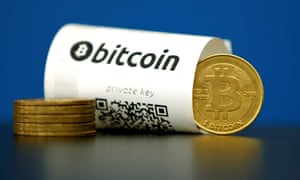
If you aren’t tied to the tech community, you might not have picked up on this salvation rhetoric. But you probably have heard of #bitcoin, which burst into the public consciousness before imploding dramatically in 2014.
But now, bitcoin is starting to look less important than the engine that drives it – the #blockchain. It was created to solve a problem that had been puzzling digital activists for decades: how to create digital property without a central authority keeping track of who owns what.
The answer to that question, first proposed by bitcoin’s pseudonymous creator, Satoshi Nakamoto, was to create a decentralised digital ledger, keeping track of every transaction made, and with its accuracy guaranteed through the combined honesty of the entire network.
The core of the idea is to get computers burning energy in order to prove that they are trustworthy, and stamping that trust on the “blocks” of recorded transactions. You could still lie to the network – but you’d need to burn more energy doing so than every honest participant, combined.
Bitcoin was the first #technology to use the blockchain, but the currency is now starting to look a bit like the steam pumping engines invented in the 17th century. Yes, it’s ingenious, but the real revolution comes when the underlying technology is used for something altogether new.

I’m on line at Starbucks and reach to pay for my Triple Venti Nonfat Latte, only I don’t reach for my wallet, I reach for my #smartphone. My poor wallet is suffering from some serious neglect these days. It occurred to me that if I didn’t have a weakness for food trucks, I probably wouldn’t use cash at all. The apps on my smartphone are now my proxy for a bank, holding and moving money in one click – the new way to truly “bank on the go.”
Think of the applications you use on a daily basis. How many of these apps have the power to transfer money? Undoubtedly, more than you realize. The 1.5 million users utilizing the payment app, Venmo, transferred $1.3 billion in funds last quarter alone. As a strong supporter of the #FinTech Revolution, I understand its magnetism, but it doesn’t take an aficionada to see the technological insurgence has already started.
Consumers are embracing self-management of their financial resources in ever-greater numbers. This increasing trend means #banks have greater competition for consumer mindshare and, as a result, reduced relevance and potentially reduced income. Individuals value transparency and choice; having their data available in user-friendly tools that can be accessed anywhere is powerful. The problem for the banks is that they aren’t able to provide these same types of tools with the same currency or quality due to lack of resources and slow moving compliance departments. Now, while banks begin to work on their next generation platforms in this hyper-connected age, FinTech apps are gaining ground quickly. For instance, the online payment system, PayPal, has singlehandedly become the new face of banking, holding more consumer money than most major Financial Institutions. The banking industry hasn’t experienced such a profound transformation since 1969, when the ATM first opened.
As #technology continues to pull us away from big banks society willingly complies, but how can we be sure our money and personal data are secure? Millennials, who represent more than a quarter of the general population, use these payment apps as an alternative to a savings accounts, storing their money for future use, without the fees and restrictions associated with major banks. However, these apps, often run by a third party software and not on a bank’s federally insured regulated infrastructure, can be risky. When transferring and holding money in a FinTech app, the user takes the risk. As competition increases and technology advances these apps come and go over night, but what happens if your money is stored in an app that one day disappears? Or if the app temporarily has custody of your funds and you can’t access them? Or if a sender cancels a transaction? Most users do not realize their money is not insured and funds cannot be easily recouped. Also, as financial data becomes more accessible, so does the possibility of security threats. To most, the risk, sometimes unknown, is worth it for faster, more convenient service.
There is good news – the potential for banks and FinTech apps to work together is endless. Banks can endorse these apps and give them a safe and insured platform to run on. The data behind these apps is also extremely powerful. Using financial data aggregation platforms, like EEI’s Trusted Network™, banks and FinTech apps can partner to perform advanced analytics. Enriched data can be used to determine spending capabilities and therefore help users make educated financial decisions. FinTech Apps aren’t going away, banks will need to be flexible and innovative in their response to consumers, all while learning to share customers’ revenue and profits.
As with everything else, we are seeing this paradigm shift with the early adopters, but before long it will be common practice with the laggards as well. All consumers want choice – what car to buy, what brand to wear and even what personal financial management apps to use. What drives choice? Awareness, branding, but most importantly ease of use and convenience. Despite operational and financial risks, the use of FinTech apps has increased. Let’s just hope our cellphone batteries and FinTech companies don’t die before we have a chance to pay the bill! 🙂
This is part of my FunTech blog series exploring the shift in technology and culture in the financial services industry.
[linkedinbadge URL=”https://www.linkedin.com/in/jaimieanzelone” connections=”off” mode=”icon” liname=”Jaimie Anzelone”] is Business Manager, Office of the CEO of Enterprise Engineering Inc.
Die Luzerner Kantonalbank AG (LUKB) #beteiligt #sich im Sinne einer strategischen Partnerschaft an #crowdhouse.ch. Die Traditionsbank nimmt ebenfalls Einsitz in unserem Verwaltungsrat. Gleichzeitig verstärken wir das Aktionariat und den Verwaltungsrat mit Francisco Fernandez, dem Gründer und CEO der Avaloq-Gruppe.
“Basierend auf der Beteiligung und dem damit zusammenhängenden Zugang zu den neu erhaltenen finanziellen Mitteln, werden wir die nächsten Wachstumsschritte einleiten und weitere Immobilien für die Kunden von crowdhouse.ch akquirieren. Ziel ist es, die digitale Transformation des Immobilienmarktes in einer Pionierrolle voranzutreiben. Wir planen in enger Zusammenarbeit mit den beiden neuen Aktionären das Angebot auszubauen und crowdhouse.ch als Immobilienhandelsplatz der Zukunft zu positionieren. Damit wollen wir das direkte und indirekte Investieren in Immobilien erstmals transparent, liquide und für jedermann zugänglich machen”, heisst es in einer Medienmitteilung
Was bringen die neuen Aktionäre mit?

Die Luzerner Kantonalbank AG (LUKB) verfügt über eine breit anerkannte Immobilien-Expertise und ist mit ihrem 2016 lancierten Leistungskonzept «Immobilienbank» auch gesamtschweizerisch präsent. Dadurch wird die LUKB wertvolle Impulse für die weitere Entwicklung unserer Plattform einbringen. Francisco Fernandez, Gründer und CEO der Avaloq-Gruppe, ist eine unbestrittene Koryphäe im Bereich der Banken- und Finanzsoftware. Wir sind überzeugt, dass die Fachkompetenz und das Beziehungsnetz von Francisco Fernandez ganz wesentlich mithelfen werden, das Angebot und die Qualität von crowdhouse.ch zu steigern.
Was bedeutet dies für Crowdhous Kunden?
Seit Lancierung von crowdhouse.ch wurden bereits 30 Millionen Franken Immobilienvolumen platziert und verzeichnen exponentielle Wachstumsraten.
Wir sind überzeugt, dass wir dank der verstärkten Eigenkapitalbasis und Expertise das Volumen bis Ende Jahr auf über CHF 100 Millionen erhöhen können. Durch die strategische Partnerschaft soll der gesamte Investitionsprozess für die Miteigentümer vereinfacht und beschleunigt werden. Unser langfristiges Ziel ist es, einerseits den diversen Akteuren im Immobilienmarkt den Zugang zu Investoren und Kapital zu erleichtern und anderseits unseren Kunden die Anlage in Immobilien so einfach wie den Kauf einer Aktie zu gestalten.
The post Luzerner Kantonalbank beteiligt sich strategisch an crowdhouse.ch &8211; 160 Jahre Schweizer Bankentradition trifft auf Fintech appeared first on Fintech Schweiz Digital Finance News – FintechNewsCH.
TD #Bank’s U.S. #mobile customers just got a major app upgrade. Tablet users, your upgrade is coming in the fall, Bank Innovation has learned. TD’s iOS users (finally) have the option to skip the passwords and make use of Touch ID. Customers also got a greater transfer functionality, allowing them toRead More
Bank Innovation
#Regulators, #legislators and entrepreneurs will decamp to New Hampshire this week for a gathering aimed at formalizing industry principles.
CoinDesk



Reply