#Innovation is a young company’s game, right? Well, not according to the #incumbents. Established financial players are aware of the need for a “digital rebirth,” according to Kathleen Murphy, president for personal investing at Fidelity Investments. “We invest a lot in #fintech, in startups of varying sizes, to help spur innovation,” said Murphy, during a fireside chat […] Bank Innovation
#Alexa now has about 12,000 skills on its platform (the 10,000 milestone was in March) since opening it up to developers in 2015, according to Ford Harris, senior business development manager at Amazon Alexa. “When we set out to build Alexa, we were looking to bring this #Star Trek experience to customers,” Harris said during the Amex […] Bank Innovation
#Green Dot has had its share of trouble in recent years — MoneyPak fraud, the attempted ouster of CEO Steve Streit, and strong entrants taking it on its core competency of prepaid cards. But none of that has stopped the company from launching new products at a regular clip &8212; GoBank for Business, GoBank for […] Bank Innovation
Biometrics are fast becoming the norm for identity verification in banking—but criminals are adapting to these authentication methods as quickly as #consumers. #Biometric forms of authentication, like the various modes of “Selfie Pay,” fingerprint recognition, and voice ID, provide #more security than passwords—but that doesn’t #mean financial institutions can afford to drop their guard. Instead, FIs […] Bank Innovation
#Wells#Fargo will begin underwriting customers for their “entire credit limit” later #this#year, Avid Modjtabai, head of payments, virtual solutions and innovation (PVSI) group said during the bank’s investor day today. Currently, customers seeking credit need to apply for individual products– such as #loans or credit cards&8211; separately, Modjtabai said. But starting in the […] Bank Innovation
I sat down with the marketing team at Anthemis to discuss the opportunities and geopolitical challenges of open finance. This is the third part of a series of five articles. You can find part one here and part two here.
So John, You’re our in-house expert on #PSD2. You&8217;ve said before that it&8217;s broadly misunderstood. Care to elaborate?
Sure. #Banks, customers, consultants, politicians and start-ups don&8217;t understand PSD2. They think that they do but they don&8217;t. They understand the aspect of it immediately relevant to them like strong auth or licensing requirements but they&8217;re yet to piece together the broader implications.
What are the broader implications?
Well, step back. First consider the motivations for the legislation. PSD1 was about increasing payments competition and reducing cost. Banking licences protect banks when it comes to deposits business because it&8217;s of systemic import but why should it give them an unfair advantage anywhere else right? PSD1 wasn&8217;t a failure but it failed to do everything it set out to do. It&8217;s fair to assume then that PSD2 would be a direct continuation of PSD1, correcting the course and setting mistakes right, but it&8217;s&160;not.
What do you mean, why&160;not?
PSD1 was formulated and signed off on prior to the financial crash. A lot has changed since then. E.U. rehabilitation and growth has lagged behind the rest of the world, youth unemployment in the region continues to grow, political unrest is destabilising the continent, the progressive socio-economic pledge of Europe is being challenged and vitally, Europe has failed to develop any new corporate global powers for the digital&160;age.
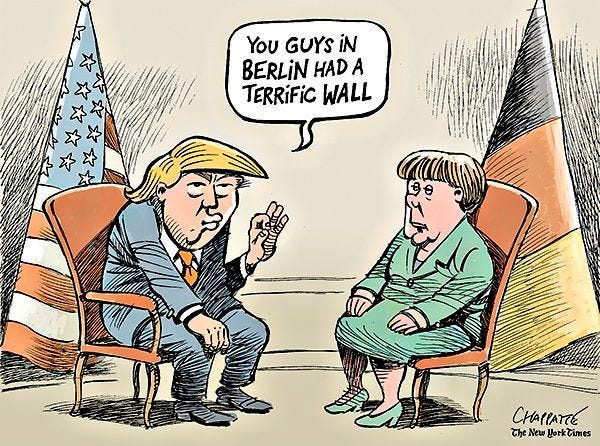
The E.U. understand that 1) massive amounts of European capital flow to the U.S. every year in the form of digital and technological consumer goods and services, 2) huge amounts of European citizens&8217; data now sits on U.S. company owned servers and 3) regional jurisdictional data, payments and identity infrastructure is inevitable and the most effective way to manage those threats is by giving would-be-global European firms a competitive edge in the form of regulation. In a way, PSD2 is a new, particularly European, kind of trade tariff. One that requires a certain level of sophistication to gain&160;entry.
So is PSD2 about payments or a U.S. —&8202;E.U. trade dispute or&160;both?
It&8217;s both. In many ways it&8217;s the most avant garde financial regulation of our time whilst also extending a long middle finger to our American cousins. The changes to the regulation on direct account to account payments and four party payment schemes show that American card schemes are obviously unwelcome in Europe in their current form but I suspect that Facebook, Apple et al will also continue to fall afoul of both the EBA and the GDPR. It&8217;s worth remembering that two weeks after Apple, America&8217;s biggest company, were ordered to pay €13bn in back taxes in Europe, Deutsche Bank, formerly Europe&8217;s biggest bank, were fined $ 14bn in New York. That&8217;s quite the coincidence.
Why? I thought we&8217;re friends with the&160;U.S.?
Of course we are. That&8217;s not the point though. Creating global European digital businesses is the fastest possible way to solve for Europe&8217;s stagnant growth and unemployment problems. Europe needs to become more digital and finance is an amazing place to start. It&8217;s long been what we&8217;re best at anyway. The important take away is that global banking is becoming increasingly heterogeneous. An industry that used to be broadly similar in every part of the world is becoming increasingly distinct. Africa focused on mobile, Asia innovating without regulation, Europe innovating through regulation and North America relying on the market to fund start-ups that can circumvent retrograde infrastructure.
So it&8217;s not just about XS2A&160;then?
No it&8217;s not just about XS2A. People have become obsessed with XS2A due to the potential implications but that&8217;s just one small part of the legislation and to be honest it&8217;s not even close to the most significant piece of&160;it.
Will any of this impact roll&160;out?
My expectation is that, due to the broader ramifications, there will be significantly less leeway given to banks who don&8217;t comply on time. Additionally, I expect that the banks who produce a full suite of premium APIs in in time for the roll out of the mandated standard payment APIs will have 24 months of runway ahead of their peers before they can even begin to catch up. It&8217;s likely to be the beginning of the thinning of the&160;herd.
The Geopolitics of PSD2 was originally published in hackingfinance on Medium, where people are continuing the conversation by highlighting and responding to this story.
Open #banking, virtual branches, machine learning, and AI — these are just some components of the #alternative banking puzzle. Digital-first upstarts that provide alternative lending #solutions have now proved to the banking world that they are as good (if not better) at attracting, underwriting, and servicing customers, when compared to traditional peers. What’s more important, […] Bank Innovation
Artificial intelligence and machine learning have found their way into lending. But can we trust robots with loan origination quite yet? Upstart — a five-year-old online lender &8212; bets you can (and you must). In fact, #more#than 25% of Upstart’s current #loans are #fully#automated, Bank Innovation has learned. “We have made this progress […] Bank Innovation




Reply